
Imagini de Gerd Altmann
Responsible profit taking is honorable. Those who are legitimate producers deserve to be rewarded for their earnest contributions. It is when profit taking replaces concern for others or for ecosystems that a perversity occurs whereby everyone and everything suffers. At that point, we are not evolving but devolving.
Those who achieve power and allow the gap to widen between the rich and the poor promote only inequity, desperation, conflict, ecological ruin, and systemic distress. Of what value are profit, power, and progress when they violate people and other species, and destroy the conditions that sustain life? As Aldo Leopold has written,
"A thing is right when it tends to preserve the integrity, stability, and beauty of the biotic community. It is wrong when it tends otherwise."
The word "progress" means moving toward a goal. However, we want to move forward on the right road. While free enterprise requires profit as an incentive to stimulate individual productivity, society requires that the welfare of the common good be acknowledged and sustained. For this, we look to our public sector for the protection of our common interests. Here too, we find the influence of private interests and the power of money and profits to be pervasive. Its effect on our democratic form of government is destructive.
DEMOCRAŢIE
A prominent United States senator once said that the influence of money in political campaign financing ". . . is nothing less than an influence-peddling scheme in which both parties compete to stay in office by selling the country to the highest bidder."

În cartea ei, The Corruption of American Politics, veteran Washington journalist Elizabeth Drew writes that money is drowning out decency and threatening the underpinnings of democracy itself.
This is ominous. Democracy is more than a form of government. It is a way of life, a formula for just relationships. The word "democracy" means rule by the people. Abraham Lincoln described this form of self-government as "government of the people, by the people, for the people," not government of some people, by some people, for some people.
Democracy supports individual freedom and the fundamental dignity and equality of all persons. Democracy, theoretically, is a form of government in which political power rests with all the people. It recognizes the intrinsic value of widespread and broad-based input. It invites the richness of diversity.
Democracy says do not look only to yourself and like-minded people for answers; avail yourself of that which others have to offer, for life is diverse. Democracy says do not be rigid or inflexible; be open and adaptable, for life is dynamic and ever changing.
Democracy says do not make participation exclusive; make it inclusive, for life is all encompassing. Democracy says do not gravitate to extremes; seek moderation, for life requires balance. Democracy says do not represent only those who have influence; represent all, for life demands justice. Finally, Democracy says do not tamper with this process, for it is your only hope of survival.
Democracy requires watchdogs. Always, it is under siege. This occurs when our capitalistic economic system and our democratic political system clash. Democracy calls for a government of, by, and for the people. Capitalism calls for profit. When the quest for profits plays a disproportionate role in electing candidates to public office, democracy is compromised.
When office holders reward their benefactors, there is a gross violation of democracy. This legal form of institutionalized corruption defeats the spirit of democracy. When the morality of our government is corrupted, democracy disintegrates. When the government is controlled by those who seek profit above the welfare of the common good, the democratic process is rendered useless.
Profit, Power, and Progress
What can be said of profit, power, and progress in the interrelated and interdependent reality in which we exist? What kind of people are we who allow grotesque disparities to exist between the affluent and the impoverished? How is it we allow one quarter of our human family to be doomed to a hopeless and unremitting battle for survival, while others of us are over-clothed, over-housed, and so over-fed that we have to go on special diets to lose weight?
This unequal distribution of opportunity and wealth is not accidental. Fueled by ignorance and greed, it results from economies organized to benefit the insatiable appetites of the opportunistic. Most individuals and institutions are reluctant to cede self-interest for the common good. Most countries are unwilling to think beyond sovereignty and national interests. Instead, shackled with destructive habits and short on vision, they violate relationships with each other and the environment. In doing so, they court disaster.
This is done in the name of profit, power, and progress. Consider profit: Too often it is the sole motivating force for many of us who shamelessly sacrifice human decency and environmental protection for short-term personal gains. We are driven by a surplus of greed and a lack of common sense.
Profit's offspring, exploitive commercialism, fans the fires of materialism. Enormous sums are invested to convince us that we need to acquire and consume products that are often unnecessary and even harmful to ourselves and our environment. Wealth and status are glorified. Image supersedes substance. We plunder and deplete our resources, torture our ailing environment, decimate other species, and pollute our already confused minds. To what end do we invest ourselves in this fatal frivolity?
Clamoring for More and More
Profiteers will always clamor for more and more. Many achieve enormous wealth. For each who has much, there are countless others who have precious little. Rage and fear grow among those who experience economic insecurity. They are filled with anxiety and despair instead of a sense of community.
Wealth and power, intoxicating and irresistible, blind us to these disparities and their eventual consequences. Those who exploit innocent others and destroy ecosystems can boast arrogantly of their "achievements," ignorant or in denial of their violations and the eventual consequences of their actions.
It is foolish and irresponsible to maximize profits regardless of human and environmental costs. Natural resources are not endlessly renewable and self-generating. People will tolerate only so much exploitation and repression. Eventually these violations will lead to famine, economic collapse, and political revolution.
The Democratic Process
The democratic process represents an appreciation for life, a celebration of diversity, and an acknowledgment of our oneness. It is a process emanating from our instinct to be free, an irrepressible force.
The ideals of democracy are the ideals of humanity. For democracy in our public sector and for capitalism in our private sector to work together harmoniously, we must fully understand the implications of our interdependence: the interrelationships of life, which sustain both human and ecological systems, must be honored.
Democracy is the form of government we have chosen to protect these interrelationships. Those of us who work in the public sector must understand our protective roles. The common good cannot be sacrificed for the benefit of the powerful.
Those of us who labor in the free market have similar responsibilities. The first is to support, not erode, the democratic process. The second is to profit in ways that do not violate people or our environment. From these judicious uses of power in both sectors, we all profit and progress.
Retipărit cu permisiunea editorului,
Hampton Roads. ©2001. (2nd edition: 2017)
www.hamptonroadspub.com
Sursa articolului
Șapte cuvinte care pot schimba lumea: O nouă înțelegere a sacrității
de Joseph R. Simonetta.
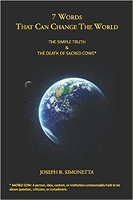 ȘAPTE CUVINTE au puterea de a schimba viața așa cum o cunoaștem: felul în care guvernăm. Legile pe care le adoptăm. Modul în care facem afaceri. Modul în care tratăm angajații, mediul nostru, unii pe alții și pe noi înșine. Când urmăm aceste ȘAPTE CUVINTE, viața noastră se schimbă. Pe măsură ce multe din viețile noastre se schimbă, lumea noastră se schimbă
Pentru a urma aceste ȘAPTE CUVINTE necesită o înțelegere clară a realității în care existăm. Abia atunci vom îmbunătăți calitatea vieții noastre, vom aresta și vom inversa impulsul nostru distructiv și nesustenabil, vom pune capăt suferințelor noastre inutile, vom prospera împreună, vom găsi pacea, vom susține umanitatea și vom înainta civilizația.
Info / Comandă această carte (Ediția a II-a)
Mai multe cărți ale acestui autor
Despre autor
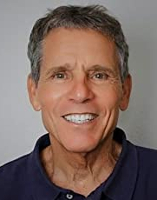 Joseph R. Simonetta deține un master în arhitectură la Universitatea din Colorado. Deține un masterat în divinitate la Harvard Divinity School și a studiat și la Yale Divinity School. Deține o licență în afaceri de la Universitatea Penn State.
A fost ofițer al armatei, sportiv profesionist, programator de computere, antreprenor și om de afaceri, proiectant de arhitectură, activist de mediu, autor, de două ori nominalizat la Congres și nominalizat la președinte. Această carte se bazează pe seria sa de prelegeri, „Uimi lumea, spune adevărul simplu”.
Vizitați site-ul web al lui Joe la 7WordsChangeTheWorld.com